
GASTROClear
Early Detection of Gastric Cancer
If diagnosis is step one in cancer care, screening is step zero.
Early detection enables early and effective treatment, helping to save and improve lives.

Cancer screening for early detection
The term ‘screening’ means looking for cancer before any symptoms appear. The reason for doing so is that the cancer is often easier to treat at this early stage. By the time symptoms appear, the cancer may have advanced and begun to spread.
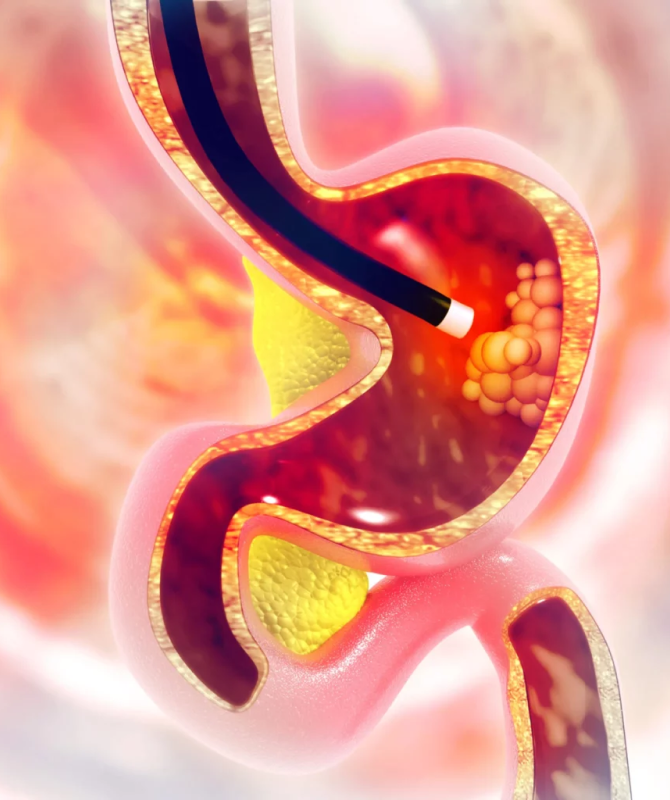
Early detection of gastric cancer
Countries with high incidence rates of gastric cancer, like Japan and South Korea, have implemented national screening programs to enable earlier diagnosis, achieving excellent results with more than 50% diagnosis at early stages.
Without a gastric-cancer-screening program, individuals tend to only seek medical attention when they are symptomatic and often when these symptoms are severe, by which time the cancer is usually in its advanced stages.
Gastric cancer marker tests
Procedures like gastroscopy, biopsy, and barium-meal X-ray can accurately diagnose gastric cancer, but they are invasive or expose potentially healthy people to radiation, which increases the risk of other cancers.
Cancer-associated changes in blood levels, or in the characteristics of biological molecules such as protein, DNA, RNA (including microRNA), and metabolites, can be used as biomarkers to make cancer screening more accurate, less invasive, and more cost effective.
There are no standard or routine tests for gastric cancer screening in most countries. Korea and Japan recommend the use of gastroscopy or barium-meal X-ray for gastric cancer screening, while other blood biomarkers are being tested in clinical trials.
Blood biomarkers that have been assessed for gastric cancer detection include Helicobacter pylori (HP) serology, serum pepsinogen, and other tumor markers such as CEA and CA19-9. However, none of these are sensitive enough or specific enough to be used for gastric cancer screening.

How can GASTROClear be used for early detection of gastric cancer?
GASTROClear is the world’’s first molecular blood test for early detection of gastric cancer. It is cheaper and less invasive than gastroscopy and can be used to assess the risk of healthy people who have not experienced any symptoms. Those found to be at high risk of gastric cancer using GASTROClear should then undergo gastroscopy for a more detailed examination.
GASTROClear has an accuracy of 87%, more accurate than any other blood biomarkers assessed for detection of gastric cancer, including HP serology, serum pepsinogen, the ABC method, and tumor markers such as CEA and CA19-9.
Frequently Asked Questions
What is gastric cancer?
Gastric cancer is a disease in which malignant, or cancerous, cells form in the lining of the stomach.
What are the first signs of stomach cancer?
The first signs of gastric cancer are often vague. Specifically, the signs may be heartburn, indigestion, a change in appetite, nausea, and vomiting.
Are stomach cancer symptoms in women different than in men?
Men are at higher risk of gastric cancer than women. However, the signs and symptoms of gastric cancer are similar for men and women.
What are the early symptoms of stomach cancer?
Gastric cancer typically causes no symptoms in the early stages of the disease. As the disease advances, the symptoms are often vague and non-specific.
How can you prevent stomach cancer?
There is no sure way to prevent gastric cancer, but there are things you can do to lower your risk. These include staying at a healthy weight, maintaining a lifestyle with regular physical activity, avoiding or limiting alcohol, and keeping to a healthy diet.
Is stomach cancer curable?
Stomach cancer is curable if detected in the early stages.
What is a gastroscopy?
Gastroscopy, also known as upper gastrointestinal endoscopy or oesophago-gastro-duodenoscopy (OGD), is a procedure where a tube with a light and camera on it is used to look for any physical changes on the surface of the upper digestive tract.
What is the preparation for a gastroscopy?
You are required to fast for at least 6 hours before the procedure to ensure that your stomach is completely empty.
Does the GASTROClear test need any special preparation?
No special preparation is needed for the GASTROClear test, which only requires a simple blood draw.
Can gastric cancer be diagnosed without biopsy?
No. Other tests can suggest that cancer is present, but a confirmed diagnosis is only possible with a biopsy.
Is there a genetic predisposition for gastric cancer?
Hereditary diffuse gastric cancer (HDGC) is a rare inherited condition associated with an increased risk of gastric cancer. The gene most commonly associated with HDGC is called CDH1. A mutation (alteration) in the CDH1 gene gives a person an increased risk of developing gastric cancer.
Where can you get tested?
The GASTROClear test is available at over 200 clinics and hospitals in Singapore.