Multiomics
Spatial Transcriptomics
Stereo-seq (Fresh Frozen)
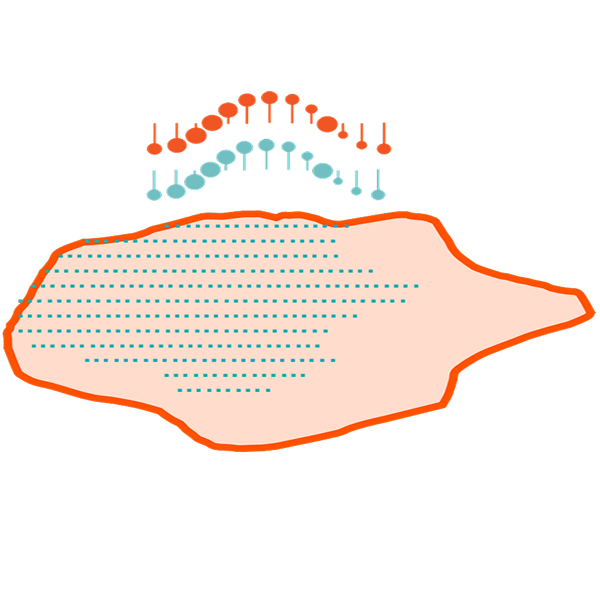
Spatial Transcriptomics powered by Stereo-seq (SpaTial Enhanced REsolution Omics-sequencing) offers whole transcriptome profiling of fresh frozen tissues at nanoscale subcellular resolution, with a large field of view.
It is a powerful research technology for spatial characterization of tumor microenvironment, construction of 3D transcriptomics models and spatiotemporal transcriptomics atlases in mammalian developmental biology, and many more applications.
Mirxes Genomics offers end-to-end service for Stereo-seq workflows, from tissue sectioning to bioinformatics tertiary analysis. Gene expression data is integrated with spatial information at a nanoscale resolution to generate unprecedented details.

Fresh-Frozen Samples
Partner with Us to Achieve Your Research Goals
Large Field of View
Chip sizes from 1cm x 1cm up to 2cm x 3cm available *depending on specific service
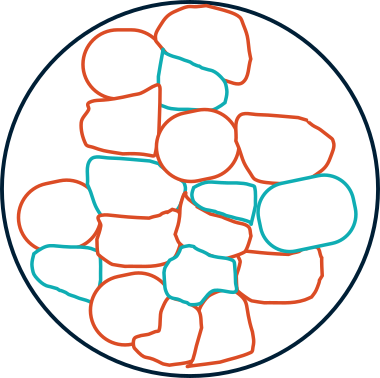
Single-cell Segmentation
Based on ssDNA-based algorithm or H&E staining on the same tissue section
Spatial Multi-omics Available
Stereo-CITE (mRNA + protein)
Experienced Service Provider
Successful work on extensive tissue types from various organisms since 2022
Sample preparation
Permeabilization timing optimization
Staining (H&E or ssDNA) and imaging
Permeabilization, in situ RNA capture and reverse transcription
Library construction and sequencing
Bioinformatics analysis
| Sample Type | Available chip sizes and recommended data quantity# per chip | Sequencing Platform | Turnaround Time |
|---|---|---|---|
| Fresh Frozen Sample embedded in OCT | - 1 cm x 1 cm (1 billion raw reads) - 1 cm x 2 cm (2 billion raw reads) - 2 cm x 2 cm (4 billion raw reads) - 2 cm x 3 cm (6 billion raw reads) | DNBSEQ-T7 | 4-6 weeks from successful determination of permeabilization time to FASTQ data delivery |
# The actual data output depends on sample quality
- FASTQ Files
- Stained Tissue Image(s)
- Barcode to Position Mapping File
- QC Statistics
- QC statistics and Spatial Barcodes Maps
- Sequence Alignment Maps
- Gene Count Matrix
- Spatial Gene Expression Cluster Analysis
- Spatial Copy Number Variation
- Cell Co-localization Analysis
- Trajectory Inference
- Many other options upon request